A conversation with Ruben Bryon, Founder and CEO of Verda, and Emergence General Partner Joe Floyd.
Most conversations about AI infrastructure start with chips and end with hyperscalers. Ruben Bryon starts somewhere else: with the fact that almost none of that infrastructure is European, and almost none of the companies building it are trying to stick around long enough for that to matter.
Verda, the company Bryon founded in 2020 as DataCrunch and rebranded last November, builds AI cloud infrastructure in the Nordics, vertically integrated from the data center up through the software layer developers actually touch. We backed the company's Series B, a round Bryon is using to do two things at once: accelerate the product, and accelerate the physical build-out of infrastructure that, in his view, Europe doesn't have enough of and needs to own outright.
We sat down with him right after the round closed to talk about sovereignty, why he turned down other term sheets, and why he's building Verda to still exist in thirty years.
Joe Floyd: Congrats on the Series B. What are your ambitions now that you've raised a big round?
Ruben Bryon: We're ramping up R&D to improve the product and deliver more value to our customers. But a big piece of this raise is also accelerating the build-out of the physical infrastructure we're doing in Europe.
Joe: Why does Europe need more of its own sovereign physical infrastructure? Why does it need a Nordic cloud?
Ruben: There's still a lot of opportunity in Europe, a lot of pockets of power for building out this kind of infrastructure. There's the obvious latency argument for locality of compute, but sovereignty matters too. As open source models get more useful and more relevant to actually run in production for real workloads, it becomes important that the compute running them exists on the European continent and is operated by European companies.
Joe: You're also moving beyond physical infrastructure into the software layer. Why does that matter, for Verda and for Europe broadly?
Ruben: The value that cloud providers bring is the same as road infrastructure or electrical infrastructure. We want this compute to exist so our customers don't have to think about what they need in place to get an environment that can scale quickly to meet demand. That shows up in different shapes: instant clusters, containerized environments, sandbox environments for agents. We want it to be easily accessible, and we want a European company to be able to offer it in a way that's mindful of the basic unit economics, covering the full vertical from the data center layer up.
Joe: What does success look like for you in twenty or thirty years?
Ruben: One of the frustrations that led me to start the company is that Europe doesn't have enough companies with a long-term enough vision to build past zero to one. A lot of companies come into existence, build something genuinely interesting, become a gravity well for people who want to build something too, and then end up selling to a larger company, or worse, to private equity.
The people who built it are left disillusioned, because they were hoping to build something generational. What we want to build is something that stands the test of time instead of chasing a quick exit, a real tech company in Europe that becomes that gravity well for local talent, so they don't have to move to the Bay Area to be part of something ambitious.
Joe: Verda, the name, refers to green. Tell us about your ambitions for AI and the planet.
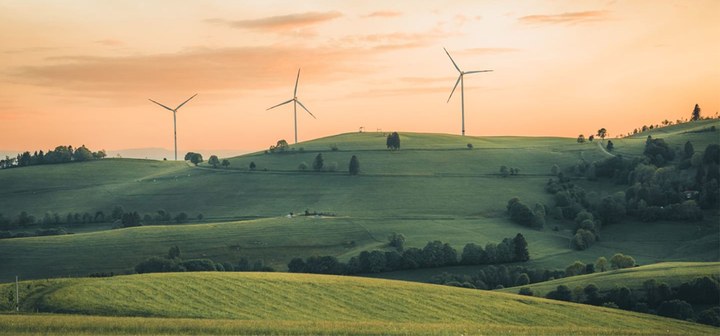
Ruben: We build the majority of our infrastructure in the Nordics and Europe, where there's access to large pools of electrical power that's straightforward to source from green power. The grid itself is already green on a global scale compared to other countries, which lets us make power purchase agreements for 100% renewable power.
More companies are giving up on that, which is a shame. Anyone who can build a gas turbine or reciprocating engine to turn fossil fuel into electricity to generate tokens is running those plants flat out because demand is so high. I think that's a mistake. There's a growing backlash to it, and I think it has merit.
As a species, we should think hard about how to build out this AI infrastructure without doing it at any cost. We want to set an example on having a low carbon footprint in the data centers we operate.